Showing posts with label Dennis Frank. Show all posts

Wednesday, February 28, 2024

History Class works with Eldred World War II Museum


Eldred World War II Museum

Students in History 419: Digital History and Archival Practices are starting new projects working with the Eldred World War II Museum located in Eldred, PA. Over the next few weeks, they will be working with museum staff to build a digital complement for an exhibit in the museum. Stay tuned as we work on these cool projects.


Sunday, March 20, 2022

Different Games are a Fun Type of Learning

Andrew Kruszka, adolescent education and history major, has an opinion piece in the opion section of the March 18 of The Bona Venture. Check out Different Games are Fun a Fun Type of Learning In History 206: Introduction to Pubic History we are using games to explore how one designs history for different audiences and, also the Civil War. If you want to explore more of the local history of the Civil War, check out the Friedsam Library Civil War Collection.

Tuesday, September 17, 2019

Working for the Robert H. Jackson Center by Ashlee Gray


This summer I had the opportunity to intern for the Robert H. Jackson Center in Jamestown, NY. The Robert H. Jackson Center in a non-profit historical center dedicated Robert H. Jackson, a U.S. Supreme Court Justice and Chief U.S. Prosecutor at the Nuremberg Trials.

Last summer, the Jackson Center offered an exhibit on Charles Goodell. The exhibit, “A Model for Courage: The Life of Charles E. Goodell,” was put together by Cameron Hurst, a St. Bonaventure student intern. The exhibit was a success, and the Jackson Center wanted to take on another Bonaventure intern to work on a program and exhibit celebrating the life and career of Stan Lundine, former Mayor of Jamestown, U.S. Congressman, and NYS Lieutenant Governor.

I originally heard about the position from St. Bonaventure archivist, Dennis Frank. He recommended me to the Jackson Center and encouraged me to apply. I was a bit hesitant applying for the position for several reasons. The first was distance; I was nervous about making to commute to Jamestown from my hometown of Delevan. It was an hour and fifteen-minute drive and my car, Green Bean, was on her last legs. The second was my lack of self-assurance.  I did not think I had the tools nor the skills to create an entire exhibit and a ten-minute video. Though I was confident in my ability to learn new skills, I was still nervous.

In the end, I decided to apply, and I vowed to give the project my all. I visited the center and met with several Jackson Center staff and board members.  A few weeks later, I was offered the position.
I started working on the project at the end of the spring semester at Bonas. I was able to find a few resources to give me a brief biography of Stan Lundine. In all honesty, I did not know who Stan Lundine was nor did I understand how important he was to the city of Jamestown, the Southern Tier district, and the state of New York. I believe my lack of knowledge on Stan was beneficial. It allowed me to go into the internship with a fresh perspective and the ability to gather information through extensive research rather than previous knowledge.

The first step was to write a biography that I could use for the informational panels in the display portion of the exhibit and as a possible narrative for the documentary. For the first few weeks, I was busy finding articles, book, and newspaper clipping on Stan and watching hours of old video interviews. I reached out to the New York state archives, Fredonia University Archives, and the Fenton Historical Center for more information and materials. After I gathered as much information as I could, I wrote my own biography and began sorting out what items I could use in the display and video.

I also conducted my own video interviews with several people who had previously worked with or for Stan Lundine. This was rather nerve-racking. I had no experience interviewing people. I went to my supervisors at the Jackson Center and asked for advice on how to best conduct the interviews. The first few interviews did not go spectacularly, but by the end, I had learned what questions to ask, how to ask them, and the best way to get a person to open up. It was a great way to practice these skills and, since then, I am more confident in my ability to interview others.
Another challenge I faced was creating the panels for the exhibit. The Jackson Center archives had a Mac desktop and I own a Lenovo laptop. I needed a program that I could use on the Mac at home. That led me to Canva. It is a simple online graphic-design tool that worked on both devices. I taught myself to use Canva by watching tutorials and creating practice panels. The program worked wonderfully, and I made 10 canvas posters for the exhibit.

For the color scheme, I chose the color blue. Details, such as color, were crucial to making the exhibit aesthetically pleasing and I wanted a color that would reflect Stan’s personality and capture his history. During his first Mayoral campaign, Stan assembled a team of prominent individuals to run alongside him and called his team the Blue Ribbon Ticket. Stan is also a Democrat and a Duke University Alumni, so the color blue has been an integral part of his history. The official color of the exhibit is Duke blue because Duke was a special place to Stan and because it would be visually appealing against the cream-colored walls of the exhibit. It was a unique color that made the entire display pop.

After the panels, the next challenge was the video. This was another skill set that I did not have, but I knew that I could learn. I watched several tutorials on iMovie and eventually taught myself how to use the software. Instead of fitting the video interviews to my narrative, I arranged the video clips by a topic and set them in chronological order. I then made my narrative fit the clips to tell Stan’s story. From there, I found various images and video clips to use throughout the film. I had to do a lot of cutting, which was hard, and I eventually cut the video to ten minutes in length and added music.
The trickiest part of the video was choosing the music. I did not want the documentary to sound like an epic movie soundtrack, nor did I want it to sound like elevator music. I spent hours sifting through tracks, looking for a right inspiring tune for each chapter of Stan’s life.

When the video was finished, I was left with roughly five days to paint and spackle the walls, hang up the posters, and fill the space. During the information collection stage of the internship, I gathered a lot of original Stan Lundine campaign material. I found over 50 campaign buttons, 2 hats, 10 bumper stickers, and 1 matchbook with a single match remaining (plus various other materials). I used these items to fill the display cases and arranged the campaign buttons in the shape of New York State. I also had various plaques and several pictures in the collection. My personal favorite item was the Duke University pennant flag. I was setting up the exhibit up until the day before the Stan Lundine Tribute event making sure everything was perfect.

It was not until after the tribute, on my way home, that the full scope of how much I accomplished hit me. I had grown so much in the four months I worked for the Robert H. Jackson Center. I not only refined the skills I learned at Bonas, but I also learned new ones. I also learned to be more confident in myself and understand that I am capable of so much more. I am extremely grateful for the opportunity to work for the Jackson Center and thankful for the experience.


Thursday, March 28, 2019

History 206: Introduction to Public History


MWF 11:30 to 12:20 -- Dr. Phillip Payne
Like the Civil War?  Like to get your hands dirty?  Thinking about a career in museums, archives, or an education-related field?  History 206 is the class for you!

What is public history?  It’s history all around us.  It’s about how people create, experience, and use history.  It’s on the web, in museums, in archives, in parks and all sort of places.

How will we do it?  Students in the Public History class actively create.  You will convert research into games, among other things.  Along the way, students learn:

  • Original Research
  • Presentation for the public
  • Gamification
  • Design Principles   

Tuesday, December 11, 2018

Data Visualization and History Internship


Ashlee Gray, double-major in History and English, is wrapping up her internship in the University Archives with Dennis Frank.  Ashlee, an alumnus of the digital history class that experimented with app making, worked on collecting, analyzing, and displaying data from the New York 154 regiment papers in the University Archives.  She worked in Microsoft Excel and then moved on to visualizing and mapping the data.  Above is a map she produced.  Next semester she plans on continuing the project to produce a more refined final product.  (Hint:  give it a moment to load and it works best if you expand it to full screen.)

Sunday, October 7, 2018

History Majors at the Bucknell Digital Scholarship Conference


Joe Aldridge and Isaac Ryss presenting at the Bucknell Digital Scholars Conference with Dennis Frank (pictured) and Phillip Payne.

The presentation, "We Built and App:  Exploring New Assignments in a History Class," was about the student, archivist, and faculty perspective in introducing a new assignment building an app to host our digital map of the St. Bonaventure Cemetery.  This is the sort of assignment that brought together the History Department, Friedsam Memorial Library, and the St. Bonaventure Android App Development club.

This being a digital scholarship conference, participants were active on Twitter so here are some Tweets about the presentation.


The conference had a lot of really cool examples of people working across disciplines and unites.  We came back with a lot of ideas for new, fun, assignments. 


Monday, May 15, 2017

Connecting the dots between liberal arts and careers

It may be to the outsider that some of the things on appearing on the blog don't add up - what's up with a history department and GIS, THATCamp, Escape Rooms, Game Design, and other stuff.  Yes, we still teach history. Students read books and write papers.  That's not going away.  In fact, the bulk of what we do falls into those categories.  The ability to deeply read a text, write a clear paper, and use content knowledge to place events in context has never been more important.

However, we're also adding some spice to how things have been done in a history class.  Some of it, frankly, is experimentation with the goal of having fun.  Why not?  Fun is a powerful thing when it comes to learning.

 But as you can tell from other postings, we're giving serious thought to the relationship between the liberal arts and careers.  For starters, reading, writing, and content are important for life and work, but we also live in an age when things are changing rapidly and much of that change is driven by technology and data.  For those of you who graduated pre-internet, think about how much our work, entertainment, and lives have changed.  Frankly, there are now many careers that didn't exist 20 years ago and who knows what will exist 20 years from now.

There is a lot being written about this topic.  We're urged to "adapt and survive" and to "race with the machine."

Fair enough.  How?

This brings us back to the innovations we've been introducing to history classes.  There is one word you need on your resume today, and that is digital and so you see our work in digital history.  This is why we're working in GIS, website creation, podcast, and such.  Students should have digital on their resumes in a concrete and professional way.

We're also giving some serious thought to how design fits into this - hence the game design and gamification.

We've been working with Bill Bechdel of XPhobia and Jennifer Pulver of SBU's events office to create an escape room summer camp.  Don't know what an escape room is?  Check out the Olean Times Herald story on Bill's room.  According to Bill, “It’s like stepping into a movie — you’re a part of the action,” he said. “My idea is to bring as much immersion to this as possible.”  For participants, it is an authentic, immersive experience.  

For educators, it's a chance to blend content with design in the curriculum.  It's a chance for educators and students alike to learn.  The next step is to take the ideas we develop with the escape room camp and bring them into classes.  That, it seems, is the key to adapting - and having fun.

Friday, April 21, 2017

Innovation


SBU is having its reception and luncheon for recipients of Keenan and Martini Grants.  A Keenan Grant funded the THATCamp, so we are happy to acknowledge the support.  SBU's Office of Events and Conferences really helped with putting the camp together and Jennifer Pulver not only did a great job with the event but also turned our poster into something really cool.  Sometimes you shouldn't let historians do graphic design.

Monday, August 22, 2016

THATCamp Bonas 16


We're hosting a THATCamp on Oct 25.  This is an outgrowth of the digital and public history projects we've been working on with Dennis Frank and the folks at the Friedsam Memorial Library.  The web page up that we'll be adding more information as we go along.  You can register for it here.

Because Dennis and I are involved and because we've been exploring gamification and game design in the classroom, we're kicking things off with a talk by Brian Mayer who is an educational game designer.  You can see his work here.

A THATCamp is an unconference.   The rules of an unconference are (1) have fun, (2) be productive, and (3) stay collegial.  The rules explained:

Unconferences are about you, the participants, proposing sessions that you explore with fellow participants with similar interest.  All disciplines are welcome.  Technology is broadly defined.

Friday, April 8, 2016

Digital History returns to Cemetery digital map project


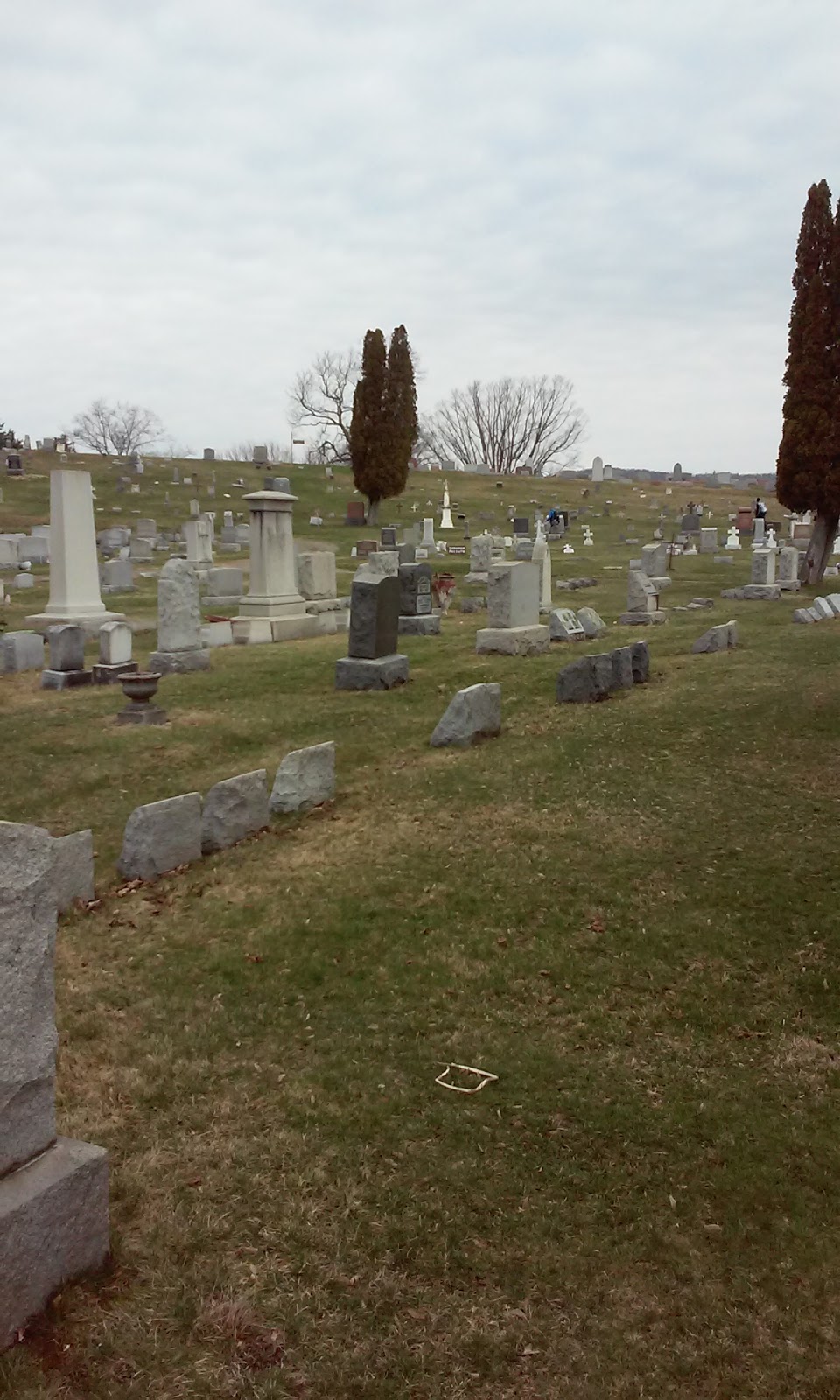
We're back at the SBU Cemetery project.  It's a work in progress that has been somewhat hampered by the weather.  We finally got something resembling a nice day and headed up to the cemetery to plot locations.  Next week we're talking about big data, maps, and, time allowing, georeferencing.


Wednesday, September 16, 2015

First Game (Viking Funeral) in Public History Class


Yesterday public history students warmed up for designing their first game by playing Viking Funeral, a card game by designer Rob Daviau.  We've been using Daviau's interview on Edx and Game Designer Round Table in class.


This gave us a nice way to discuss game mechanics and, perhaps more importantly, to begin thinking and talking about how we can use them in an educational context and apply them to our work with the Civil War.  Plus, we had fun (or at least as much fun as we can have in a class).  Thursday the students pitch their ideas for a card game.


Friday, September 4, 2015

Public History Week One


Students in History 206:  Introduction to Public History started the semester reading about Information Architecture and listened to a Game Design Round Table podcast on collaboration.  Now it was time to put theory into practice by doing a card sorting exercise.


We gave them note cards that I had labeled and shuffled.  The two teams then had to organize the mess. One of the challenges was reading my hand writing.

One group decided that they needed more space.  Next week we start looking at how these concepts apply to museum planning.

Saturday, March 7, 2015

Game On


Join us March 20 in the basement of Friedsam Library where we'll be playing board and/or tabletop games starting at 2:30.  Since  we're going to be playing board games, it wouldn't be a complete experience without ordering pizza.  So stop by, role some dice and eat a slice.  This is a relaxed event, so if you can't be there at 2:30 that's okay.  We'll have a several games going so folks can hop in or head out as need be.

Why are we doing this?

This semester Leah Brownstein, Dennis Frank, and I have been exploring the academic side of games and how games can be applied in the classroom and history.  We're planning how students enrolled in History 206:  Intro to Public History (Fall 2015) can build games themed around the collection of the New York 154th Regiment.

There is a long history (get it?) of historically themed games.  Oregon Trail anyone?  Of course, video games have exploded and with that the historical trend has continued.  Assassin's Creed?  In recent years board games have made a comeback (more fun to play as a group in person?).  Gamification has also emerged out of primarily video games, which is using game elements for non-game purposes.  Even if you haven't heard of gamification you have seen it, almost anytime you get on the web and see a leader board, badge, patch, or similar thing.  LinkedInn has them.  Obviously, Facebook not only uses gamification but also has a lot of games available.  What I haven't figured out is how Angry Birds relates to history.  Yet.

Monday, January 12, 2015

St Bonaventure Cemetery Map Unveiled


Roll the drums!  Pull back the curtain!

As documented on elsewhere on this blog, starting last spring students enrolled in History 419:  Digital History and Archival Practices began the process of creating an interactive map of the St. Bonaventure Cemetery.  Dennis and I were introducing GIS into the history curriculum.  Mistakes were made.  False starts?  Yes.  However, these provided valuable learning opportunities and they could all be fixed.  Jason has been working in the archives with Dennis to get the map ready, so here it is.  

St. Bonaventure Cemetery Map

This will be a ongoing process.  Students taking History 419 can plan on continuing working with GIS and the cemetery records.

Thursday, November 20, 2014

Dennis Frank, Jason Damon, and Phillip Payne at the Bucknell Digital Scholarship Conference


Jason Presenting
Dennis Frank, Jason Damon, and Phillip Payne presented “St. Bonaventure Cemetery: Introducing History Students to GIS” at the Bucknell Digital Scholarship Conference.  The theme of the conference was Collaborating Digitally: Engaging Students in Faculty Research.  The three discussed the rewards and challenges of introducing GIS into a class from the perspective of archivist, students, and faculty.  During the spring 2014 semester students enrolled in History 419:  Digital History and Archival Practices worked on a GIS map of the St. Bonaventure cemetery.  Jason continues to work on the project this semester for the university archives.